
How Tenant Parking Quota Management Solves a Common Commercial Property Problem
A business leases three parking bays in a commercial building.
That sounds simple enough. Three bays should mean no more than three of that tenant's vehicles are parked on site at any one time.
But what happens if the business has six, eight or ten staff members who drive to work?
With a traditional swipe card or remote system, enforcing that three-bay allocation can become surprisingly difficult. Credentials get shared between staff, vehicles change from day to day and building managers can end up resolving disputes when one tenant's vehicles occupy spaces allocated to someone else.
This is not really an access problem. The vehicles may all belong to legitimate tenants.
It is a quota management problem.
For multi-tenant commercial properties, ANPR-based tenant parking management provides a different way to approach it. Instead of controlling which individual vehicles are permanently allowed to enter, the system can control how many vehicles each tenant is allowed to have on site at the same time.
Key Insight
Effective tenant parking management is not about limiting how many vehicles a business can register. It is about enforcing how many of those registered vehicles can occupy the car park at once.
Why Traditional Access Systems Struggle With Parking Allocations
Swipe cards, remotes and fobs are designed primarily to answer one question: should the person holding this credential be allowed through the gate?
That works well for basic access control.
It becomes more difficult when the property needs to enforce commercial parking allocations.
Imagine a tenant leases three bays but has ten employees who occasionally drive to work. Giving the business only three swipe cards seems like an obvious solution.
The problem is that cards can be passed between staff.
One employee arrives, enters using the card and passes it to someone else. Before long, the business can have considerably more than three vehicles inside the car park.
The access system has technically done its job. Every entry used a valid credential.
But the parking allocation has failed.
This distinction is important for commercial property managers because it explains why simply upgrading a gate or issuing new cards does not necessarily solve tenant parking disputes.
Tenant Quotas Change What the System Controls
ANPR-based quota management approaches the problem differently.
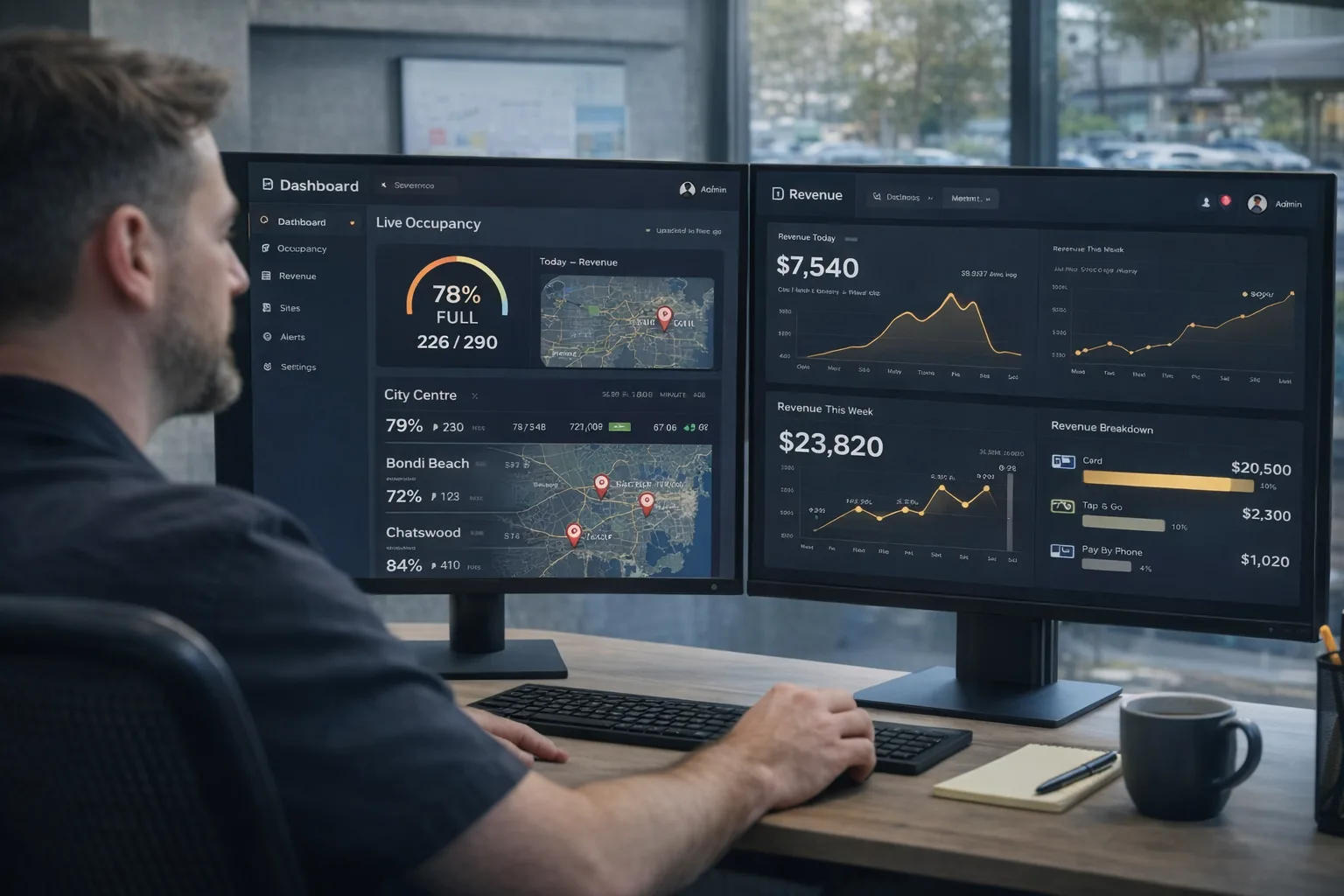
Rather than making the physical access credential the centre of the system, vehicle registrations and tenant allocations are managed digitally.
A tenant can register multiple vehicles that may legitimately need parking access.
The quota then determines how many can be parked inside at the same time.
For example, a company leasing three bays might register:
- Two directors' vehicles
- Four employee vehicles
- Two pool vehicles
There is no problem with having eight vehicles registered.
The important rule is that only three can occupy the tenant's allocated parking capacity at once.
When a fourth registered vehicle arrives, the system can identify that the tenant has already reached its quota and apply the appropriate rule.
That is fundamentally different from trying to control parking allocation by restricting the number of cards issued.
Knight Frank Chatswood: Three Bays Can Still Mean Four Registered Cars
Parkezi's Knight Frank Chatswood project provides a practical example.
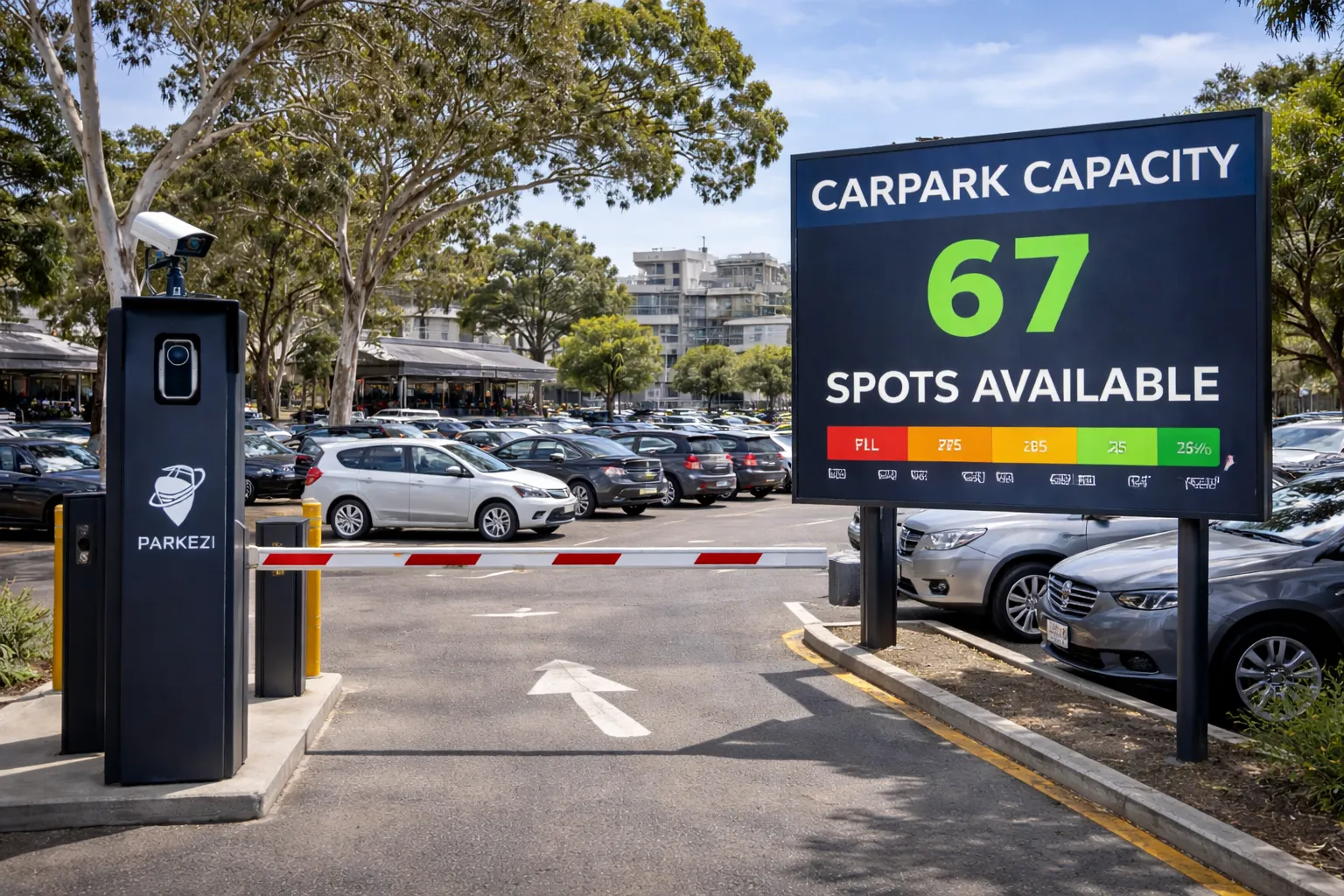
The 120-bay property includes 50 leased bays and 70 casual bays, with 18 tenant companies using the building. Each tenant company has its own login.
Under the quota management system, tenants can whitelist as many vehicles as they need.
What they cannot do is occupy more bays than they have paid for.
If a tenant has three leased bays and four registered vehicles, any three of those vehicles can be on site.
When the fourth arrives, the system recognises that the tenant's allocation has already been reached. The additional vehicle can then be notified to leave or be charged the casual parking rate.
The property manager does not need to decide which three employees are permanently entitled to park.
There are no physical permits to distribute and no cards for the building manager to continually administer.
The tenant manages its own registered vehicles while the system enforces the actual parking allocation.
That flexibility is particularly useful in modern workplaces where the people coming into an office can change throughout the week.
Liverpool Shows What Happens Without Quota Enforcement
The Liverpool project demonstrates the same problem from the opposite direction.
The car park serves more than 30 businesses and previously relied on swipe cards.
Cards were being systematically shared. A business with three allocated bays could share one card among its staff and bring as many as ten vehicles into the facility.
Those additional vehicles did not simply exceed that tenant's allocation. They occupied parking intended for other businesses.
There was no quota system capable of enforcing how many vehicles each tenant had inside.
This is why parking allocation disputes can be difficult to solve manually.
From the driver's perspective, they may have legitimate access to the building. From the tenant's perspective, the employee may genuinely work there.
But neither fact means the business should be able to occupy more parking bays than it leases.
A parking management system needs to distinguish between being an authorised user and having available parking allocation at that moment.
Giving Tenants More Control Can Reduce Building Administration
Parking management often becomes a property manager's problem because the building manager sits between the tenant and the access system.
A new employee starts and needs parking.
Someone changes vehicles.
A registration needs updating.
A card is lost.
An employee leaves and access needs to be removed.
When all of those changes need to go through building management, a relatively simple parking facility can create an ongoing stream of administrative work.
Tenant-level access changes that relationship.
At Knight Frank, each of the 18 tenant companies has its own login.
That allows responsibility for managing authorised vehicles to sit closer to the business using the bays, while the overall parking rules remain controlled by the system.
For property managers, the benefit is not simply automation. It is removing routine parking administration that does not need to sit with the building management team.
Quota Management Also Makes Parking Fairer
Parking disputes are often difficult because enforcement can feel subjective.
One tenant may complain that another business is occupying too many spaces. Building management then has to investigate who owns the vehicles, whether they are authorised and which tenant should actually be using each bay.
A digitally enforced quota creates a clearer rule.
If a business leases five bays, its simultaneous parking allocation is five vehicles.
It can potentially register more vehicles to accommodate hybrid working, staff changes and different daily schedules, but the physical parking entitlement remains the same.
That makes the system more flexible for tenants without reducing fairness for everyone else in the building.
It also gives property managers a clearer basis for dealing with parking enquiries because access activity is recorded digitally rather than relying entirely on physical permits or observations.
Where Tenant Quota Management Makes Sense
Not every property needs sophisticated quota management.
A small building with a handful of permanent users and fixed allocated bays may be adequately managed with simpler access control.
Quota management becomes particularly useful where there are:
- Multiple commercial tenants
- Limited parking relative to staff numbers
- Flexible or hybrid working arrangements
- Regular changes in employee vehicles
- Shared commercial parking areas
- Ongoing disputes over parking allocations
- Physical access credentials being shared
The more dynamic the tenant population becomes, the less practical it is to treat a swipe card as a reliable representation of a parking bay.
For properties facing those issues, ANPR-enabled parking management provides a way to connect vehicle access with actual parking entitlement.
Key Takeaways
- Access permission and parking entitlement are two different things.
- Swipe cards and remotes can be shared, making tenant parking quotas difficult to enforce.
- ANPR allows tenants to register multiple legitimate vehicles without giving them unlimited parking capacity.
- A tenant leasing three bays can register more than three vehicles while still being limited to three vehicles on site at once.
- Knight Frank Chatswood uses tenant logins and quota management across 18 tenant companies.
- At Liverpool, a lack of quota enforcement allowed businesses to significantly exceed their allocations by sharing swipe cards.
- Tenant self-management can reduce routine administration for property managers.
- Quota-based rules create clearer and fairer parking allocation across multi-tenant properties.
Related Reading
For a broader comparison of different access technologies, readHow to Choose the Right Parking Access Control System for Your Site.
You can also explore Parkezi's parking automation systems to understand how ANPR, access control and cloud management work together.
If you are considering replacing an existing swipe-card or permit system, Parkezi's parking system installation process explains what is involved in planning an upgrade.
Frequently Asked Questions
Can a tenant register more vehicles than the number of bays it leases?
Yes. That is one of the advantages of quota-based management. A tenant can have multiple authorised vehicles registered while the system limits how many are permitted on site at the same time according to the tenant's actual parking allocation.
What happens when a tenant exceeds its parking quota?
The exact rule can be configured for the property. At Knight Frank Chatswood, the example supplied by Parkezi is that if a tenant with three bays already has three vehicles on site, a fourth can be notified to leave or be charged the casual parking rate.
Does tenant quota management eliminate the need for swipe cards?
Where ANPR is used as the vehicle access method, physical parking credentials can be removed from the process. This also reduces the opportunity for cards or remotes to be shared between vehicles.
Making Tenant Parking Easier to Manage
Multi-tenant parking becomes difficult when the access system cannot distinguish between a legitimate tenant vehicle and a tenant exceeding its allocated capacity.
Knight Frank and Liverpool demonstrate both sides of that problem. One shows how digital quotas can enforce allocations while still giving tenants flexibility. The other shows what can happen when shared physical credentials provide access without controlling how many vehicles are actually inside.
For commercial property managers, that is the real value of tenant quota management. It is not about creating more restrictions. It is about making existing lease allocations enforceable without creating another manual task for building management.
If tenant parking allocations are becoming difficult to administer or enforce at your property, contact Parkezi to discuss how ANPR-based quota management could be configured around the way your tenants actually use the building.